
Yoga

July 1st, 2009 – 5:37 am Posted by B Kenney

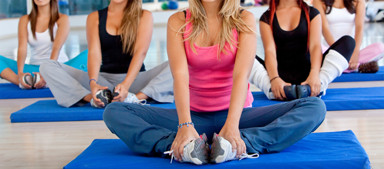
picYoga does the body good. More specifically, yoga helps exercise certain aspects that normal aerobic and intense workout routine don’t.

A weight lifting, or even running, routine will not address balance, relaxation, and flexibility like yoga does; all of which are very important aspects of a healthy body. Yoga also will help increase overall endurance, muscular strength and weight loss.

An ideal workout regimen will include weight lifting, aerobic, and yoga exercises in the entire routine.

The reason yoga has such an effect on the body is due to the unique motions and discipline ideals used during a normal session. The average body needs as much relaxation and range of flexibility as it does pounds of muscle. The different stretches and forms practiced in yoga help condition the body in many different ways. Frequent practice in yoga before a workout can also help reduce muscle tearing or severe injuries as it generally stretches vital muscles in the body.

Anyone interested in practicing yoga will find there are many different options to do so. Thousands upon thousands of books exist out there on many different exercises and forms, and, of course, there are just as many websites and online articles dedicated to the same thing. Those interested can purchase or rent yoga exercise DVDs, which actually display the forms and show correct ways to stretch.

For all you guys out there worried about looking silly, there are even some really cool poses out there; some take the form of an eagle, a bear, or even a deadly scorpion.

Yoga can even help regulate moods better. Some of the poses help reduce stress and increase overall body relaxation, almost like true meditation. Many poses and forms can provide the body with as much relief as a power nap. Of course, it goes with out saying, yoga also can increase total energy.

So, next time you’re stirring up a new workout routine, why not include a few minutes here and there of yoga? It’s been practiced for over 5,000 years, so where could you go wrong?

Share/Save/Bookmark

Recognize a Real Injury

June 23rd, 2009 – 9:50 am Posted by Louise

picThere are some people who feel a little bit of pain and stop whatever they are doing immediately. They might whine or complain frequently, and observers tend to think they are overreacting. Equally at fault, however, are the people at the other end of the spectrum: the ones who feel pain and choose to ignore it, claiming, “It’s no big deal” or “It will go away.”

My sister is one of the latter. Starting a few weeks ago, she started to limp while she was running; it was painful to watch. She even developed a limp while she was walking, so finally, she went and got a bone scan. The results: a stress fracture in one her tibia and another fracture forming in her femur. Her femur. After the skull, it is is the strongest bone in the human body. She was told that a couple more weeks of running would have given her definite fractures. Now she has to take at least two months off.

You may think that my sister runs an absurd amount; she doesn’t. (She has been averaging a moderate 25 miles a week.) Perhaps she doesn’t get enough calcium? Actually, she’s been focusing on enriching her diet with healthy foods like yogurt. She was doing everything right, and she would not believe that anything was seriously wrong, yet now we know something definitely was. Hindsight tells us she should have stopped sooner, but how could she have known beforehand? There seems to be a fine line between the risk of making a petty complaint and ignoring a serious injury.

Joint pain, especially in the knees or wrist, should never be overlooked.  Serious pain or tenderness at a specific point may indicate a significant injury. Additionally, if you feel pain somewhere, you should compare both sides of your body to see if there is swelling. You should never try to “work through” swelling. Instead use the R.I.C.E. method: rest, ice, compression, and elevation. (For more details, visit an article on our sister site Health Eagle.) If the swelling does not reduce after a couple days of treatment, you should seek a physician.

It’s better to catch a potential injury early and take time to recover, than to live with the adverse effects of a permanent problem.

Share/Save/Bookmark

Gatorade versus PowerAde

June 18th, 2009 – 4:52 am Posted by Bea

gatoradeGatorade or PowerAde? That is the question. Personally, if I had to choose I would say neither and would pick water. However, there are times when it comes down to replenishing electrolytes and sodium in my body while keeping my body hydrated. On a rare occasion I may venture into the world of sports drinks. So, which would I pick? PepsiCo’s Gatorade product or Coca Cola’s PowerAde?

At first glance the two products are very similar, but is this so? Let us take a look. Gatorade came first. It was the first sports drink that was created specifically to replenish electrolytes that are lost through sweat. Salt, sodium citrate and mono-potassium phosphate are the main ingredients in Gatorade for replenishing these electrolytes.  PowerAde has half the amount of sodium that Gatorade has (55mg in comparison to 110mp) and each serving size is 70 calories (which is 20 calories more than a serving of Gatorade). That being said, if you need to replenish a lot of sodium, Gatorade is the better way to go, but if your workouts are average or low, you may enjoy the taste of PowerAde more because of its extra sugars. PowerAde has also added some extra vitamins such as b6, b12, and niacin.

The two products use different types of sugars. Gatorade contains sucrose and glucose-fructose–both are simple sugars. PowerAde uses high fructose corn syrup and maltodextrin–both are not simple sugars. The sugars that Gatorade uses are much healthier than PowerAde’s. PowerAde may taste better, but that is because they use that high fructose corn syrup (a controversial sugar).

Both Gatorade and PowerAde do their jobs in the sense that they replenish electrolytes and keep up your energy levels. The two options are very similar, but I would still go with Gatorade because it uses simple sugars. Personally, I perform physical activity in order to be healthy, and high fructose corn syrup is not a healthy ingredient to be drinking.

Share/Save/Bookmark

Summer Fitness & You- Part II

June 17th, 2009 – 5:34 am Posted by Michele

baptist-sports-medicineSummer is here, and you are ready for a great workout.

Yesterday we shared some ideas for warming up and cooling down during summer workouts.  Today we have some suggestions from Trent Nessler, managing director of Baptist Sports Medicine in Tennessee, for exercising when it is hot outside.

The first thing that Mr. Nessler noted was that workouts need to be planned according to the weather, “Depending on the heat index, your workouts should be tailored accordingly.  This may mean exercising early in the AM or in the evening when the heat index is much lower.  Or, it may mean that you need to exercise indoors that day.”

If you have a day where outdoor exercise is appropriate, Mr. Nesslers offers the following suggestions, “Some great summer activities include hiking, biking, and jogging.  Summer also leads to a lot more interest in water related activities and exercises.  These can include anything from swimming to kayaking.”

What should be noted is that as the temperature increases, so does the intensity of the workout.  “In the warmer weather, your workouts definitely become more challenging,” Mr. Nessler stated. “Workouts in the summer results in the body burning more calories than they would with a workout of the same exact intensity during the winter.”

So, head outside when the weather allows, and get fit this summer!

Check out other articles from our summer fitness series– learn more about staying hydrated, kids and exercise, warm-ups & cool-downs, and using your smartphone for a workout.

Share/Save/Bookmark

Summer Fitness & You- Part I

June 16th, 2009 – 7:32 am Posted by Michele

huntley-drive-fitnessThrough the cold months of winter and rainy months of spring, many can be heard saying, “Once nice weather arrives I can exercise outside!”  However, this nice weather can turn hot pretty quickly, and outdoor exercise is avoided.  To learn more about summer fitness ideas, I interviewed Dena and Alexis Seletzky, owners of Huntley Drive Fitness, a gym located in Hollywood, California.

Q: Should people utilize a different warm-up routine before a workout that is completed outside on hot day?

A: The most important rule is proper hydration. Your performance and overall experience depend on what you do the day before your workout.  All levels of exercise should begin with a warm-up. On a hot day it’s very important to pay attention to your heart rate; under these conditions, we recommend a slightly longer and less rigorous warm-up. The heart rate monitor is a great tool and will guide you through a hot day . . . as you’ll keep your eye on the number rather than your perceived exertion level. In our experience, exercisers always guess their heart rate to be higher than it actually is.

Q: Is a strength training workout or a cardio workout better in hot weather?

A: This is one of the great fitness myths, and clients ask that question all the time.  Exercisers can overexert themselves in the heat both while doing cardio or strength training. So, one is not better than the other. A heart rate monitor is the best tool. We use the “Rocky Balboa” training-in-the-snow analogy. Our bodies perform longer, burn more calories and develop faster conditioning when we can cool ourselves down adequately. There are exceptions for endurance athletes of course.

Q: Should a different cool-down routine be completed on a hot day?

A: The most important element of a proper cool down is getting the body back to a comfortable breathing and sweating state. It’s ideal to slowly bring your heart rate down by choosing a cool-down like walking and then stretching. It’s also important to use a towel to remove excess sweat and speed the cooling down process. Exercisers should choose a shady area for stretching.  If a person has difficulty cooling down and returning to their resting heart rate, then apply a cold towel to the nape of the neck.  In addition, during cool-down on a hot day it is crucial to re-hydrate … preferably with an electrolyte replenishing drink.

Put these warm-up and cool-down ideas to use.  Check back tomorrow for summer workout suggestions. Don’t forget to visit some of other sites to learn more about hydration, children & summer fitness, and workouts via smartphones.

Share/Save/Bookmark

More Tips for Summer Fitness

June 9th, 2009 – 9:55 am Posted by Louise

picA previous posted article, 5 Tips for Summer Fitness, has some great words of advice for summer training. These pointers are applicable in the summer year after year: 1. Start earlier, 2. Stay hydrated, 3. Eat lighter, 4. Be active in the evening, and 5. Get adequate rest. By using these tips you can beat the heat and stay active in the summer. Here are some more:

Stretch. I’m sure we all understand by now: stretching is important. However, stretching is even more important in the summer in order to avoid painful heat cramps.

Got salt? With all the reminders to stay hydrated, the electrolytes seem to have been put on the back burner. Electrolytes, essential minerals such as potassium, calcium, magnesium and sodium, are equally as important as fluids. While drinking an insufficient amount of water can cause dehydration, drinking too much water can dilute your system causing an electrolyte imbalance. This also can occur after you sweat because you’re not only losing water but a large amount of sodium. If you’re sweating a lot, it would be wise to replenish your need for sodium with a small salty snack or an electrolyte-enriched sports beverage.

Wear lightweight clothing. If you’re going to be in the heat, help your body control its temperature by wearing light clothing. Light clothes protect your body from direct sun rays and also allow quick evaporation for increased comfort.

Acclimate. As always, you should never suddenly increase your level of activity by a large amount. Especially in the summer, you should gradually build up your tolerance.

Use sun protection and insect repellents. Sometimes an early-morning run or a late night stroll just isn’t possible so the best you can do is wear sunblock. (It should be applied while you are dry, prior to sun exposure.) You also could find a shady area like a forest; however, you should be wary of bugs and apply an appropriate amount of insect repellent.

With these tips you should be able to train in the summer and safely avoid heat-related illnesses.

Share/Save/Bookmark

Sports Massages

June 2nd, 2009 – 9:37 am Posted by Bea

picSports massages are not your typical massages. You may be thinking, but it is a massage! How could you want to avoid one of those? Well, sports massages may not always feel great. Sometimes it is necessary to break down knotted up muscles–which leaves you sore the next day, but in the end it will all be worth it. My friends like to call the pain that you get from a sports massage to be a “good kind.”

Most sports massages are not full body massages. Sports massages have specific aims in mind, and they must be applied skillfully. Massages are the most effective forms of therapy for releasing muscle tension, and if you receive a massage every day, you may help prevent injuries that could have occurred because of overuse. One thing to look out for are muscle imbalances; it is important to have your masseuse detect any variations in the tissues in order to keep your body equal.

There are three main categories of massage that are used in sports massages. These three techniques are effleurage, petrissage, and frictions. Effleurage is typically used at the start of a message. It is made up of a variety of stroking movements that are done with the palm of your hand and your fingers. You want to start slowly with effleurage in order to put the athlete at ease, to warm up the tissue, to increase the blood flow, to stimulate nerves, relax the muscles, and more. After you have finished with this step, you move on to petrissage.

Petrissage is the kneading that is used on deeper tissues. It is used to mobilize fluids, stretch the muscle fibers, and to induce relaxation. After the first phase is complete, you will begin to aim and direct your massage at specific parts. The next step could be the painful one. After attempting to loosen everything, it is now time to use friction. Friction is used for deeper and more painful moments that are done to specifically break down lesions, separate muscle fibers, and more.

As an athlete, it is important to take care of your body, so feel free to treat yourself to a massage once in a while.

Share/Save/Bookmark

Muscle Confusion, Say What?

May 27th, 2009 – 9:04 am Posted by B Kenney

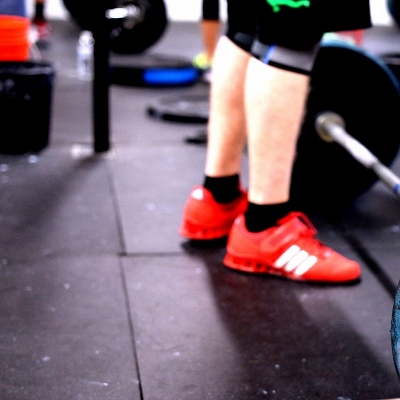
picThe worst part of my workout routine is the set of dead lifts I do. I never have been completely comfortable doing them because well…let’s face it, dead lifts are tough. So, I tend to always avoid using dead lifts in my workout routines. But in all actuality, the dead lifts are really the best part of my routine (physically), as far as my body is concerned. Which is exactly why my body started to bulk up much faster after I threw the dead lift sets in.

Why do I say this?

Over time, the muscles and/or body learn to adapt to specific exercises and motions. This natural adaptation not only allows your body to heal and become stronger, it ensures your body works less and less over time as you continue a regular routine. With every workout, your body loses a certain amount of strength building potential and eventually a regular workout requires a change-up if muscle building is desired.

In order to maximize a workout routine, everyone should change exercises in their normal cycle every 6-8 weeks.  Keep in mind, however, that a change-up in regular routine doesn’t always mean a new exercise needs to be introduced; even a simple angle change, or reverse grip motion will work just as well. For example, if you have been doing crunches for the past 6 weeks, and you desire a change, just do full sit-ups instead or even inclined/hanging sit-ups. This slight change will throw off your muscles, and you may even notice the new change-up seems a little more difficult.

This process used to keep muscles working hard and to their full potential is known as “muscle confusion”. The idea is to keep your body and muscles from adapting to specific exercises, so that they are forced to work harder.

Follow these guidelines closely and change-up your normal routine every 6-8 weeks, and eventually your muscles will bulk or tone almost like they are screaming, “Say what?”

Share/Save/Bookmark

A New Kind of Race

May 19th, 2009 – 9:49 am Posted by Louise
Tagged as: Walking

charity-waterThis past Sunday I participated in the Walk for Water in Nashua, New Hampshire. This race, unlike a typical 5k, involves a weight: a 40 pound, water-filled jerry can. To us, a jerry can is something that we might recognize as holding fuel. To thousands of people in Africa, a jerry can represents the container in which they lug five gallons of water from the nearest water station back to their home.  This journey often takes three hours, and some carry a full jerry can in each hand- that is, 80 pounds of water.

Walk for Water was created in order to raise funds that will go toward the creation of a well in an impoverished community. The creation of this well will not only eliminate the time-consuming and stressful journey to collect water, which is commonly made by women and children (who suffer by losing valuable time that could be spent in school), but also provide a source for clean water, which currently one in six people in the world do not have. The sign pictured states the fact, “4,500 children will die today from water-related diseases.”

I was part of a team of six members who shared the 40 pound yellow monstrosity in a walk up and down Main Street. (You may have seen a similar image in the public service announcement by Charity: Water that featured Jennifer Connelly.) Carrying it on my own without spilling water from its loose cap proved to be nearly impossible for intervals greater than 20 yards. After a very short time, most participants came to realize that it would have to be a group effort, and we shared the handle between two members. The walk was extremely strenuous, even though it was on all counts less difficult than the journey some people make each day. I walked a lesser distance, shared lesser weight, and walked with a cool breeze rather than a blazing sun. Nonetheless, it was an eye-opening experience.

I hope to see more walks like this one in the future. It not only raises funds and awareness for a good cause but allows participants to experience first-hand the ongoing struggles of thousands of people with which we are otherwise completely unassociated. In addition to that, it was a workout for my arms, which is unique for a race!

Share/Save/Bookmark

FiveFingers

May 12th, 2009 – 9:56 am Posted by Bea

picThough some people may find these “shoes” attractive, I think that they are the funkiest pieces of footwear I ever have seen! Remember those good ol’ toe socks? Okay, well these shoes are similar to the socks in the sense that every toe has its own spot.

Vibram FiveFingers are supposed to provide your feet with an all natural sensation. With these shoes you feel as if you are walking barefoot. FiveFingers will help to engage all of the sensory receptors, tendons, ligaments, bones, and muscles. When your feet are stuck in a pair of shoes, all of these different elements of the foot cannot always be stimulated and exercised. FiverFingers can solve all of those problems! These shoes will help your balance, agility, and proprioception (The ability to sense stimuli arising within the body).

FiveFingers are made up of a thin, abrasion-resistant stretch polyamide fabric, and the sole is made of Vibram’s TC1 performance rubber compound. These materials are non-marking, and they provide grip not only in dry conditions, but when it is wet outside as well! To make it even better, you wash them in a machine. Another fun fact is that every style and color of these shoes are made out of vegan friendly materials.

FiveFingers allow you to feel in touch with the ground. You can feel the different types of ground cover, such as the grass, gravel, pavement, and more. You even can feel the rocks underneath your feet without having to worry about hurting your feet. Some people say that their posture has improved and that they have less back pain. This is because regular shoes raise your heel a few inches higher then what is natural for your body. FiveFingers will help your foot to strengthen itself naturally as life intended it to.

These shoes are around $80, so they are pretty expensive, but they seem like a good shoe to try out. I know a person who owns a pair, and he absolutely loves them. Even though his coach hates it, he even uses them to run.

*Vibram is looking for runners to try out this shoe for a study that is being conducted by Professor Daniel Lieberman at Harvard University.

Share/Save/Bookmark